
When Is the Best Time to Sell Your Home in the UK? If you’re planning to put your property on the market, timing can make a big difference in how quickly it sells and the price you achieve.
Selling a home in the UK (official guide to selling a home in the UK) isn’t just about location and price—timing can make a big difference
The UK housing market has clear seasonal trends, and understanding when buyer activity is at its peak can help you maximise your sale. From spring surges to quieter winter months, knowing the best time to sell ensures your home attracts serious buyers and stands out from the competition.
If you’re planning to sell your home, timing can feel just as important as price, location, and presentation.
Many homeowners ask the same question: Is there a “perfect” time to sell? While no timing guarantees success, the UK property market does follow clear seasonal patterns that can significantly influence how quickly your home sells and how much you achieve.
This guide explains the best and worst times to sell a house in the UK, using market behaviour, buyer psychology, and seasonal trends—clearly structured and practical, so you can make a confident decision.
If you want to know how much your home could sell for before listing, check out our free home valuation tool to get an accurate estimate instantly.
What You Will Learn as you Sell Your Home
- The best and worst times to sell a house in the UK
- Which months sell homes fastest and for the best price
- How seasonal trends affect buyer demand
- The role of market conditions and mortgage rates
- When selling outside peak seasons still works
- The best day to list your property for visibility
Best and Worst Times toSell Your Home in the UK
For most sellers, the pattern is clear. Spring delivers the strongest demand, while winter—especially December—is usually the slowest.
Early autumn offers a second strong opportunity, while summer performance depends heavily on timing and location.
- Best season: Spring
- Best months: March, April, May
- Worst months: Late November and December
- Second-best season: Early autumn (September–October)
- Slowest season: Winter
Understanding why these patterns exist helps you decide whether to act now or wait.
Why Timing Matters When Selling a House
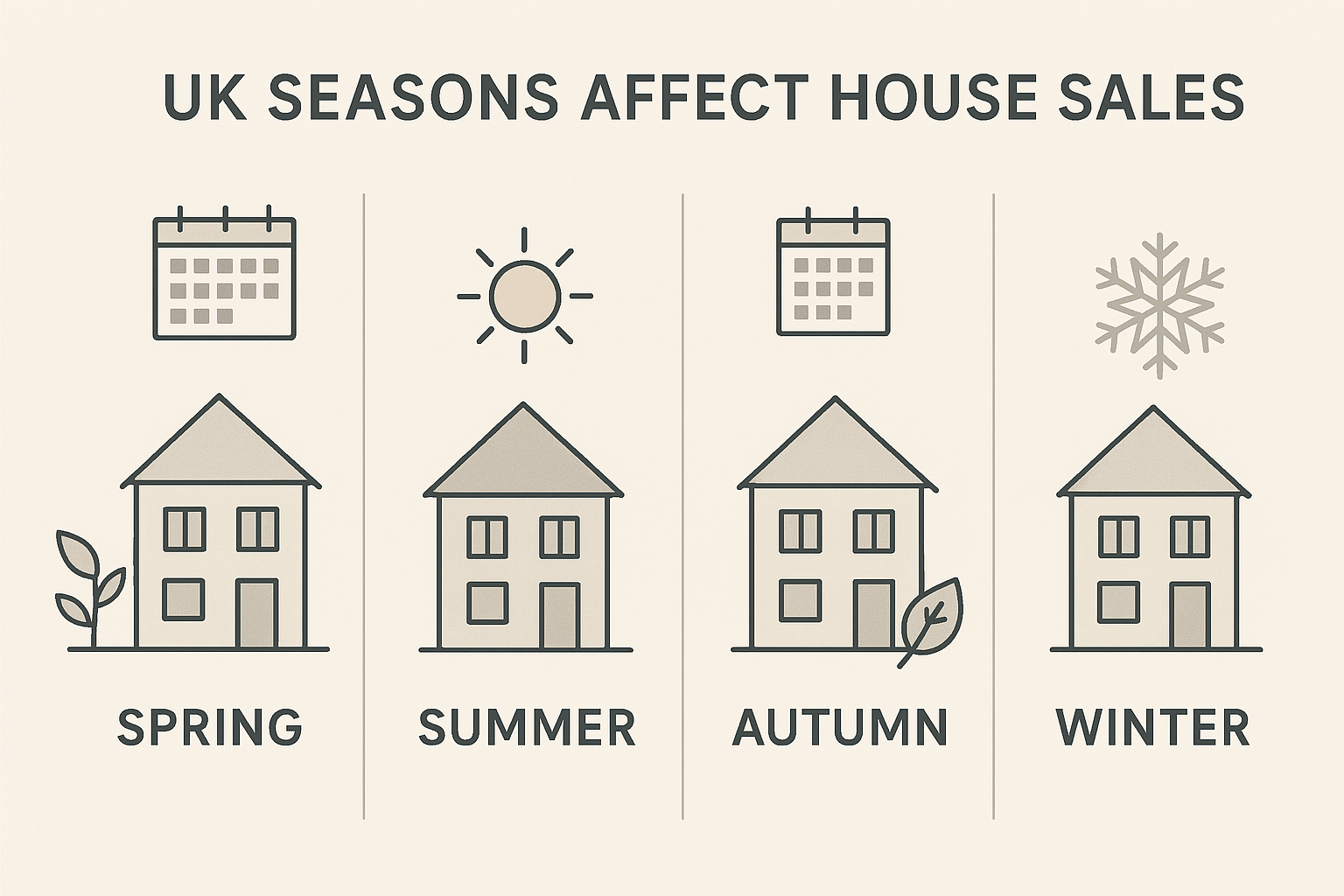
The UK housing market is not evenly active throughout the year. Buyer interest rises and falls depending on factors like weather, school schedules, holidays, and financial planning cycles. When more buyers are searching, properties attract more viewings, receive offers faster, and are less likely to need price reductions.
On the other hand, when buyer demand drops, homes tend to stay on the market longer, negotiations become tougher, and sellers often need to adjust expectations. Timing doesn’t replace good pricing or presentation, but it can amplify their impact.
The Best Time of Year toSell Your Home in the UK
- Spring: The Strongest Time to Sell
- Summer: Strong Start, Slower Finish
- Autumn: A Second Strong Opportunity
- Winter: The Quietest Period
Spring: The Strongest Time to Sell
Spring is widely regarded as the best time to sell a house in the UK. Between March and May, buyer activity increases sharply as people become more motivated after winter. Longer daylight hours make homes feel brighter and more inviting, while gardens and outdoor spaces start to look their best.
Spring is particularly effective for family homes, as many buyers want to secure a property early enough to move before the next school year. Although competition from other sellers increases, demand usually rises even faster, creating favourable conditions for quicker sales and stronger offers.
Summer: Strong Start, Slower Finish
Early summer can still be a productive selling period, especially during June and early July. Many buyers are eager to complete their move before autumn, keeping demand relatively steady. Homes with outdoor space often perform well during this time, as buyers value gardens and entertaining areas.
However, momentum often slows in August. Holiday travel and school breaks can delay decisions, reduce viewing numbers, and extend selling timelines. Summer can still work well, but pricing realistically becomes more important as buyer focus becomes more divided.
Autumn: A Second Strong Opportunity
Autumn is often considered the second-best season to sell a house in the UK. After summer holidays end, buyers return to the market refreshed and ready to make decisions, particularly in September and October. With fewer new listings than in spring, sellers may face less competition.
Autumn buyers tend to be serious and motivated, often aiming to complete before the end of the year. That said, activity usually tapers off as November progresses, making early autumn the most effective window within the season.
Winter: The Quietest Period
Winter is traditionally the slowest time to sell a house. Shorter days, colder weather, and the Christmas period all contribute to reduced buyer activity. December is often the quietest month, with fewer viewings and slower transaction timelines.
Despite this, winter is not impossible for sellers. Buyers active at this time are often highly motivated due to job moves, deadlines, or personal circumstances. January can also bring renewed interest as buyers set fresh goals for the year.
The Best Month to Sell Your Home
Across the UK, March consistently stands out as the strongest month to list a property. Buyer demand rises noticeably after winter, homes present better with increasing daylight, and many buyers want to secure a purchase early in the year.
Other strong months include April, May, and September, while December and early January are generally the weakest. Choosing the right month can significantly influence early interest and final sale outcomes.
The Worst Time to Sell a House in the UK
Late November through December is typically the most challenging period for sellers. During this time, buyers shift focus to holidays, travel, and seasonal spending, while lenders and solicitors often slow operations.
If selling during this period is unavoidable, realistic pricing and patience are essential. Otherwise, waiting until January or early spring usually provides better conditions and renewed buyer interest.
How Market Conditions Affect the Best Time to Sell
Seasonal trends matter, but broader market conditions can sometimes matter more. In a seller’s market, where demand exceeds supply, homes can sell well at almost any time of year. In a buyer’s market, timing becomes more critical, and selling during peak seasons offers a clear advantage.
Mortgage rates, affordability, and buyer confidence also influence demand. Even during strong seasons, rising borrowing costs can reduce competition, while favourable financial conditions can boost activity year-round.
Do Regional Differences Matter?
Absolutely. Property markets across the UK behave differently depending on location. London, for example, often follows different trends from other regions, while Scotland operates under a distinct sales system altogether.
Rural areas, coastal towns, and commuter regions can also peak at different times. While national trends provide guidance, local market data should always play a major role in deciding when to sell.
Can You Still Sell Outside the “Best” Time?
Yes. Homes sell in every month of the year. While peak seasons offer advantages, a well-priced and well-presented home can still attract serious buyers outside these periods. Flexibility, realistic expectations, and strong marketing are key.
Conclusion
In the UK, the best time to sell your home is generally spring, with March offering the strongest conditions for most sellers. Early autumn provides a valuable second opportunity, while winter—especially December—tends to be the slowest period.
Ultimately, the right time to sell depends on a combination of seasonal trends, local market conditions, and your personal circumstances.
By understanding how timing affects buyer behaviour, you can choose a moment that maximises interest, reduces delays, and helps you achieve the best possible result.
Frequently Asked Questions
Is spring always the best time to sell a house in the UK?
Spring is generally the strongest season, but autumn and early January can also be effective depending on local demand.
Can I sell my house in winter?
Yes. Winter buyers are often serious and motivated, especially in January.
What month should I avoid selling my house?
Late December is usually the quietest due to holidays, but sales can still happen.
Does location matter more than timing?
Often yes. Local demand can outweigh seasonal trends.
Should I wait for market conditions to improve before selling?
If your personal situation is right, waiting isn’t always necessary—strategy matters more than perfection.